Islamic New Year & Muharram
Aani Studio x An-Nasihah

About this pack
In partnership with An-Nasihah Publications. This Key Stage 2 lesson introduces the Islamic New Year through the Hijri calendar and the month of Muharram. Pupils compare lunar and solar calendars, learn the twelve Hijri months and discover how the Companions chose the year of the Hijrah as the starting point. Using Surah al-Tawbah 9:36, they identify the four sacred months and consider what it means for a time to be sacred. The lesson then explores 'Ashura, its link to Prophet Musa (peace be upon him) and gratitude, and Hanafi guidance on which days may be voluntarily fasted.
By the end of the lesson, pupils will be able to:
• Understand the Islamic New Year and why the Hijri calendar begins with Muharram
• Explain why Muharram is one of the four sacred months
• Explore the significance of 'Ashura and why Prophet Musa (peace be upon him) fasted in gratitude
• Use Islamic evidence to justify an explanation
What’s inside
- 18-slide presentation
- 3 worksheets
- Teacher answer sheet with crossword solution
- Teacher guidelines (2 pages)
- Set of 3 A4 posters
Curriculum links
SMSC
- SpiritualSacred time, gratitude to Allah and beginning a new year with intention.
- MoralAvoiding wrongdoing, standing against oppression and putting wrongs right.
- SocialPartner talk and respect for pupils who do not fast.
- CulturalThe Hijri calendar, Makkah and Madinah, and the shared link to Prophet Musa.
Cross-curricular
- RESacred months, 'Ashura and voluntary fasting
- HistoryHow the Companions established the Hijri calendar
- ScienceLunar and solar years, and why Ramadhan moves through the seasons
SEND & inclusion
- Support, Core and Challenge pathways on every activity slide
- Sentence stems and word banks
- Visual month wheel
- EAL vocabulary pre-teaching guidance
How this lesson meets your standards
SMSC: Spiritual · Moral · Social · Cultural
ISI framework: Section 2: Pupils’ education, training and recreation · Section 3: Pupils’ physical and mental health and emotional wellbeing · Section 4: Pupils’ social and economic wellbeing and contribution to society
Performance Standard 2: 2.1 Personal development · 2.2 Understanding of Islamic values and awareness of Emirati and world cultures · 2.3 Social responsibility and innovation skills
Domain 3: Learning outcomes: 3-2 Personal development · 3-2 Social development
Students’ Personal Development and Well-being: Well-being and inclusion: development opportunities · Students’ behaviour: responsible citizenship
Cambridge learner attributes: Responsible · Reflective · Engaged
IB learner profile: Principled · Open-minded · Caring · Reflective
CASEL competencies: Self-Awareness · Self-Management · Social Awareness · Relationship Skills · Responsible Decision-Making
Personal and Social Well-being: Development of the self · Social responsibility
General capabilities: Ethical Understanding · Intercultural Understanding · Personal and Social capability
Teacher reviews
Be the first teacher to review this pack.
Members can review a pack after teaching it. Log in
Reviewed by local scholars
Hanafi fiqh throughout
Sources checked
Qur'an and hadith verified before use
Made by teachers
Taught at Aani Academy
More like this
See all Cross-Curricular & Events
The Kindness Effect
World Kindness Day 2026 Assembly & Lesson Slides · Worksheets · Answers · Teacher guidelines · Poster
 Cross-Curricular & Events
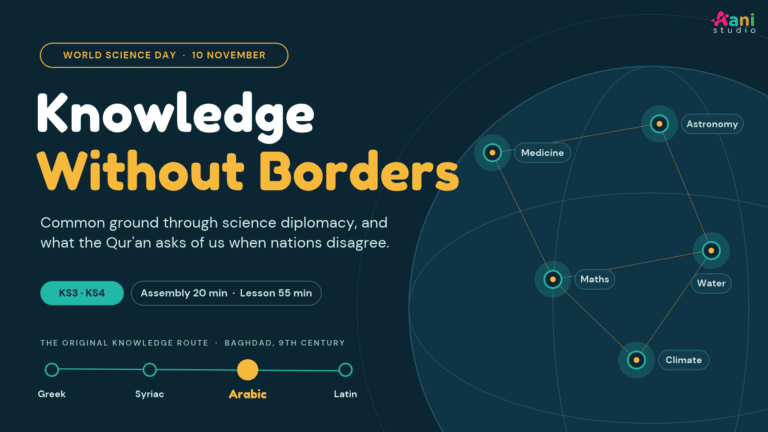
Knowledge Without Borders
World Science Day 2026 KS3–KS4 Lesson & Assembly Slides · Worksheets · Answers · Teacher guidelines · Poster
 Cross-Curricular & Events
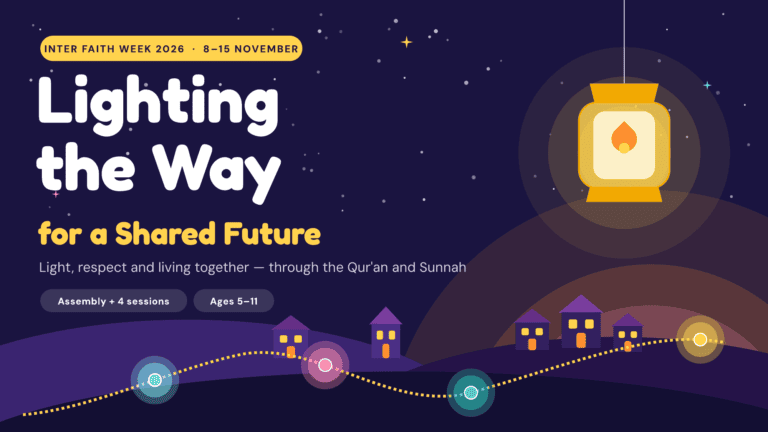
Lighting the Way for a Shared Future
Inter Faith Week 2026 Assembly & Lessons Slides · Worksheets · Answers · Teacher guidelines · Poster
 Cross-Curricular & Events
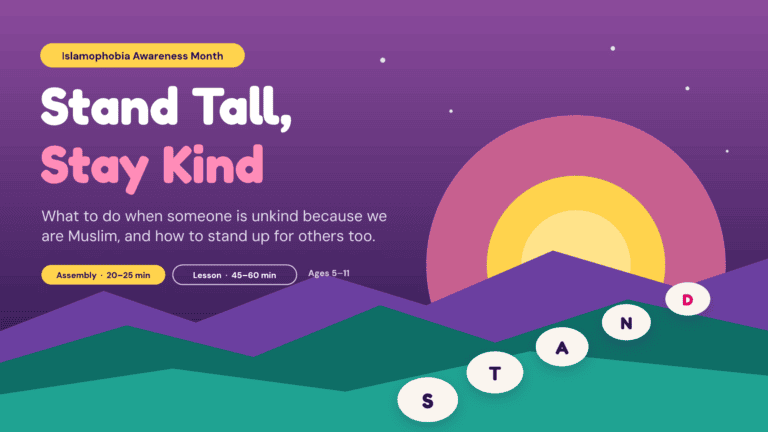
Stand Tall, Stay Kind
Islamophobia Awareness Month Assembly & Lesson Slides · Worksheets · Answers · Teacher guidelines · Poster
Wish this pack had something extra?
Tell us in Staff Voice. Teachers' ideas shape what we make next.