Pure Choices: Halal Foods & Cross-Contamination
Aani Studio x An-Nasihah

About this pack
In partnership with An-Nasihah Publications. This Key Stage 4 lesson shows students that halal is about more than ingredients: it is about how food is sourced, prepared, handled and protected. Starting from Surah al-Baqarah 2:172, students explore why eating halal is an act of worship and how it is linked to the acceptance of du'a. They learn the conditions of halal slaughter and the Tasmiyah, the difference between halal, haram and mashbooh, and how cross-contamination through shared oil, utensils and grills can make halal food impure. Real-life case studies from school canteens, takeaways and family BBQs, plus a KS4 debate, help students apply the principle: when in doubt, leave it.
By the end of the lesson, students will be able to:
• Understand the Islamic concept of halal and haram in relation to food
• Recognise the conditions of halal slaughter and the importance of Tasmiyah
• Explain cross-contamination and how halal food can become haram
• Apply Islamic rulings to real-life food scenarios faced by Muslim teenagers
• Reflect on how halal food affects faith, character and the acceptance of du'a
What’s inside
- 19-slide presentation
- 2 worksheets (exam-style questions and real-life scenarios)
- Teacher guidelines (2 pages)
- A4 poster
Curriculum links
SMSC
- SpiritualEating halal as worship and its link to du'a and blessings.
- MoralResponsibility, honesty and caution with doubtful matters.
- SocialMaking good choices with friends, family and when eating out.
- CulturalHalal food in modern Britain: canteens, takeaways and restaurants.
Cross-curricular
- REHalal, haram and mashbooh; slaughter and Tasmiyah
- PSHEFood choices, eating out and asking the right questions
- Food TechnologyCross-contamination, shared equipment and food labels
SEND & inclusion
- Sentence starters and halal / haram sorting for support
- Paired or group discussion of scenarios
- Extended explanations and debate for stretch
- Key terms on every slide
How this lesson meets your standards
SMSC: Spiritual · Moral · Social · Cultural
British values: The rule of law · Individual liberty
Personal development: Health and wellbeing
ISI framework: Section 2: Pupils’ education, training and recreation · Section 3: Pupils’ physical and mental health and emotional wellbeing · Section 4: Pupils’ social and economic wellbeing and contribution to society
Performance Standard 2: 2.1 Personal development · 2.2 Understanding of Islamic values and awareness of Emirati and world cultures · 2.3 Social responsibility and innovation skills
Domain 3: Learning outcomes: 3-2 Personal development · 3-2 Health development · 3-2 Social development
Students’ Personal Development and Well-being: Well-being and inclusion: development opportunities · Well-being and inclusion: independent learning and leadership · Students’ behaviour: responsible citizenship
Cambridge learner attributes: Responsible · Reflective · Engaged · Confident
IB learner profile: Principled · Open-minded · Caring · Balanced · Reflective
CASEL competencies: Self-Awareness · Self-Management · Social Awareness · Relationship Skills · Responsible Decision-Making
Personal and Social Well-being: Development of the self · Health and environmental responsibility · Social responsibility
General capabilities: Ethical Understanding · Intercultural Understanding · Personal and Social capability · Civics and Citizenship
Teacher reviews
Be the first teacher to review this pack.
Members can review a pack after teaching it. Log in
Reviewed by local scholars
Hanafi fiqh throughout
Sources checked
Qur'an and hadith verified before use
Made by teachers
Taught at Aani Academy
More like this
See all Cross-Curricular & Events
The Kindness Effect
World Kindness Day 2026 Assembly & Lesson Slides · Worksheets · Answers · Teacher guidelines · Poster
 Cross-Curricular & Events
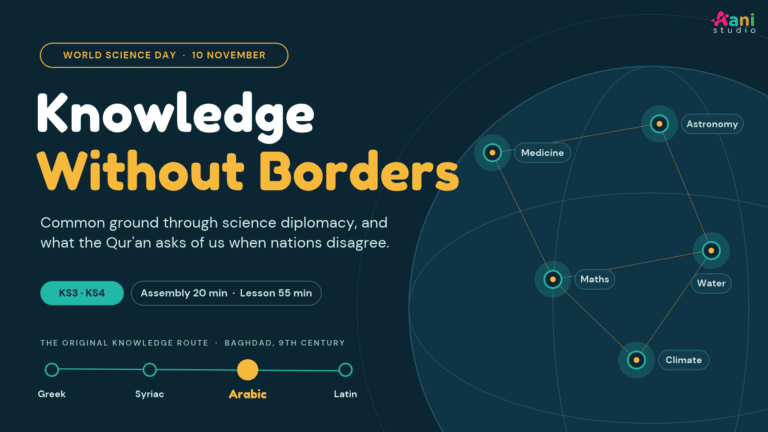
Knowledge Without Borders
World Science Day 2026 KS3–KS4 Lesson & Assembly Slides · Worksheets · Answers · Teacher guidelines · Poster
 Cross-Curricular & Events
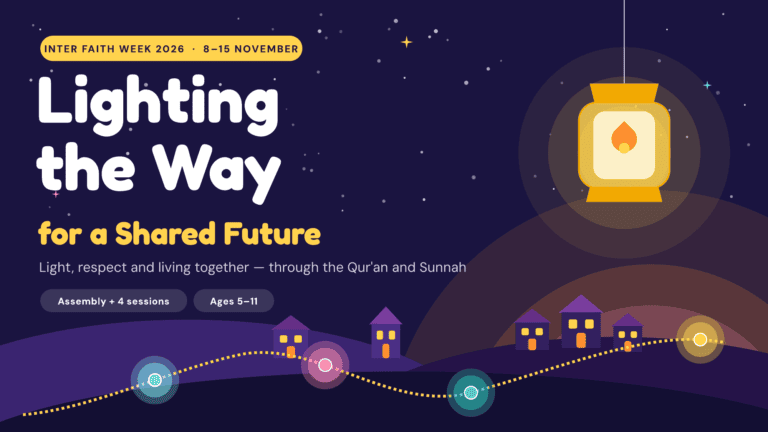
Lighting the Way for a Shared Future
Inter Faith Week 2026 Assembly & Lessons Slides · Worksheets · Answers · Teacher guidelines · Poster
 Cross-Curricular & Events
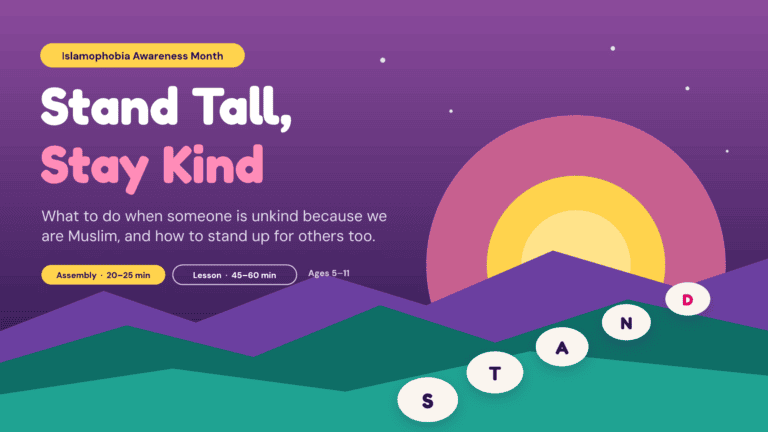
Stand Tall, Stay Kind
Islamophobia Awareness Month Assembly & Lesson Slides · Worksheets · Answers · Teacher guidelines · Poster
Wish this pack had something extra?
Tell us in Staff Voice. Teachers' ideas shape what we make next.