Ramadan: Preparing Hearts & Habits
Aani Studio x An-Nasihah

About this pack
In partnership with An-Nasihah Publications. This Key Stage 4 lesson treats Ramadan as a reset for both heart and habits. Starting from Surah al-Baqarah 2:183, students explore taqwa as the purpose of fasting and how it reaches beyond food to speech, eyes, emotions, attention and intention. They examine the habits that strengthen or drain a fast, design a realistic daily routine around school and family life, and study a hadith on how false speech weakens the fast. Pressure-test scenarios on gossip, provocation and online comparison lead to a personal 30-day plan, with one habit to carry beyond the month.
By the end of the lesson, students will be able to:
• Understand how Ramadan develops taqwa and why intentional habits protect that purpose
• Explain the link between fasting, self-control and character across six everyday areas
• Identify realistic strategies for building and sustaining habits during and beyond Ramadan
• Apply Islamic teaching to real-life scenarios involving speech, pressure and consistency
What’s inside
- 12-slide presentation
- 3 worksheets
- Teacher answer sheet
- Teacher guidelines (2 pages)
- A4 poster
Curriculum links
SMSC
- SpiritualTaqwa and God-consciousness, with the inner state shaping outer action.
- MoralHonest self-assessment and consistency over performance.
- SocialPaired and small-group discussion, respecting differing levels of practice.
- CulturalRamadan as lived by British Muslim students, and habits common to all cultures.
Cross-curricular
- REThe purpose of fasting and source analysis of Qur'an and hadith
- PSHEHabit change, sleep, screen-time boundaries and handling peer pressure
SEND & inclusion
- Sentence stems and fill-in habit planners
- Word banks, paired talk and oral answers
- Private self-rating rather than shared answers
- EAL vocabulary pre-teaching guidance
How this lesson meets your standards
SMSC: Spiritual · Moral · Social · Cultural
Personal development: Health and wellbeing
ISI framework: Section 2: Pupils’ education, training and recreation · Section 3: Pupils’ physical and mental health and emotional wellbeing · Section 4: Pupils’ social and economic wellbeing and contribution to society
Performance Standard 2: 2.1 Personal development · 2.2 Understanding of Islamic values and awareness of Emirati and world cultures · 2.3 Social responsibility and innovation skills
Domain 3: Learning outcomes: 3-2 Personal development · 3-2 Health development · 3-2 Social development
Students’ Personal Development and Well-being: Well-being and inclusion: development opportunities · Students’ behaviour: responsible citizenship
Cambridge learner attributes: Responsible · Reflective · Engaged
IB learner profile: Principled · Open-minded · Caring · Balanced · Reflective
CASEL competencies: Self-Awareness · Self-Management · Social Awareness · Relationship Skills · Responsible Decision-Making
Personal and Social Well-being: Development of the self · Health and environmental responsibility · Social responsibility
General capabilities: Ethical Understanding · Intercultural Understanding · Personal and Social capability
Teacher reviews
Be the first teacher to review this pack.
Members can review a pack after teaching it. Log in
Reviewed by local scholars
Hanafi fiqh throughout
Sources checked
Qur'an and hadith verified before use
Made by teachers
Taught at Aani Academy
More like this
See all Cross-Curricular & Events
The Kindness Effect
World Kindness Day 2026 Assembly & Lesson Slides · Worksheets · Answers · Teacher guidelines · Poster
 Cross-Curricular & Events
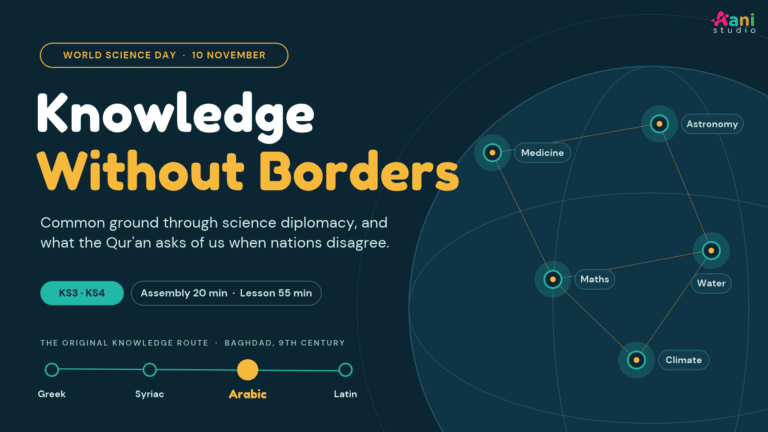
Knowledge Without Borders
World Science Day 2026 KS3–KS4 Lesson & Assembly Slides · Worksheets · Answers · Teacher guidelines · Poster
 Cross-Curricular & Events
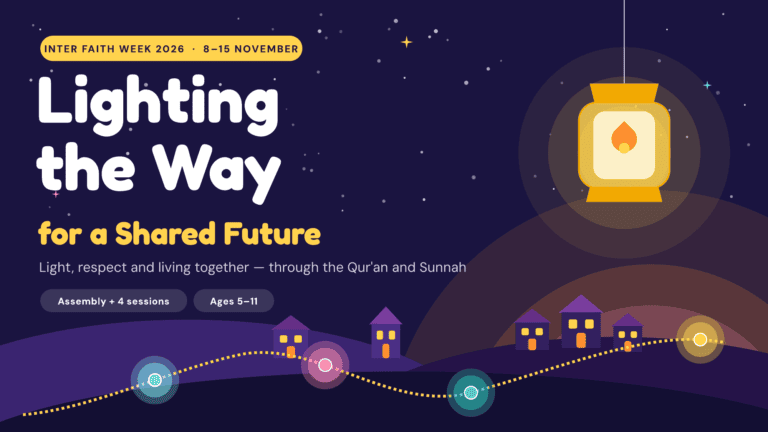
Lighting the Way for a Shared Future
Inter Faith Week 2026 Assembly & Lessons Slides · Worksheets · Answers · Teacher guidelines · Poster
 Cross-Curricular & Events
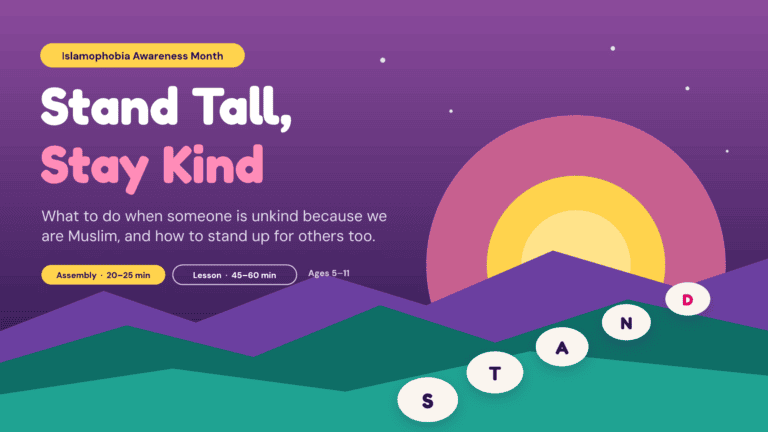
Stand Tall, Stay Kind
Islamophobia Awareness Month Assembly & Lesson Slides · Worksheets · Answers · Teacher guidelines · Poster
Wish this pack had something extra?
Tell us in Staff Voice. Teachers' ideas shape what we make next.