
The Masjid & Community: Features of a Masjid and Famous Masaajid
Aani Studio x An-Nasihah

About this pack
In partnership with An-Nasihah Publications. This Key Stage 2–3 lesson shows pupils that the masjid is more than a building: it is a centre of worship, learning and community. Pupils label the key features of a masjid, such as the mihrab, minbar and wudu area, and explore the adab expected inside it through sorting tasks and real-life scenarios. They consider the benefits of attending the masjid for individuals and the wider community, supported by authentic hadith. The lesson ends with the three sacred masaajid, Masjid al-Haram, Masjid an-Nabawi and Masjid al-Aqsa, and why each holds a special place.
By the end of the lesson, pupils will be able to:
• Understand what a masjid is and its role in worship, learning and community
• Identify the key features of a masjid and explain their purpose
• Explain the adab expected when visiting a masjid
• Describe the benefits of attending the masjid, individually and communally
• Name and locate the three sacred masaajid and explain their significance
What’s inside
- 12-slide presentation
- 3 worksheets
- Teacher answer sheet with word search solution
- Teacher guidelines (2 pages)
- A4 poster
Curriculum links
SMSC
- SpiritualWorship, connection to Allah and the idea of sacred space.
- MoralAdab, respect, responsibility and cleanliness.
- SocialCommunity, belonging and looking after shared spaces.
- CulturalThe three sacred masaajid, Muslim heritage and global Muslim identity.
Cross-curricular
- REThe masjid's role, features and adab
- GeographyLocating Makkah, Madinah and Bayt al-Maqdis and the direction of qiblah
- HistoryMasjid an-Nabawi and the first Muslim community; al-Aqsa as the first qiblah
SEND & inclusion
- Labelled masjid diagram with word bank
- Start, Strengthen and Stretch questions on slides
- Sentence stems, paired talk and oral answers
- EAL vocabulary pre-teaching guidance
How this lesson meets your standards
SMSC: Spiritual · Moral · Social · Cultural
British values: Mutual respect and tolerance
Personal development: Relationships (RSHE) · Life in modern Britain and citizenship
ISI framework: Section 2: Pupils’ education, training and recreation · Section 3: Pupils’ physical and mental health and emotional wellbeing · Section 4: Pupils’ social and economic wellbeing and contribution to society
Performance Standard 2: 2.1 Personal development · 2.2 Understanding of Islamic values and awareness of Emirati and world cultures · 2.3 Social responsibility and innovation skills
Domain 3: Learning outcomes: 3-2 Personal development · 3-2 Social development
Students’ Personal Development and Well-being: Well-being and inclusion: development opportunities · Well-being and inclusion: independent learning and leadership · Students’ behaviour: responsible citizenship
Cambridge learner attributes: Responsible · Reflective · Engaged · Confident · Innovative
IB learner profile: Principled · Open-minded · Caring · Reflective
CASEL competencies: Self-Awareness · Self-Management · Social Awareness · Relationship Skills · Responsible Decision-Making
Personal and Social Well-being: Development of the self · Social responsibility
General capabilities: Ethical Understanding · Intercultural Understanding · Personal and Social capability · Civics and Citizenship
Teacher reviews
Be the first teacher to review this pack.
Members can review a pack after teaching it. Log in
Reviewed by local scholars
Hanafi fiqh throughout
Sources checked
Qur'an and hadith verified before use
Made by teachers
Taught at Aani Academy
More like this
See all Cross-Curricular & Events
The Kindness Effect
World Kindness Day 2026 Assembly & Lesson Slides · Worksheets · Answers · Teacher guidelines · Poster
 Cross-Curricular & Events
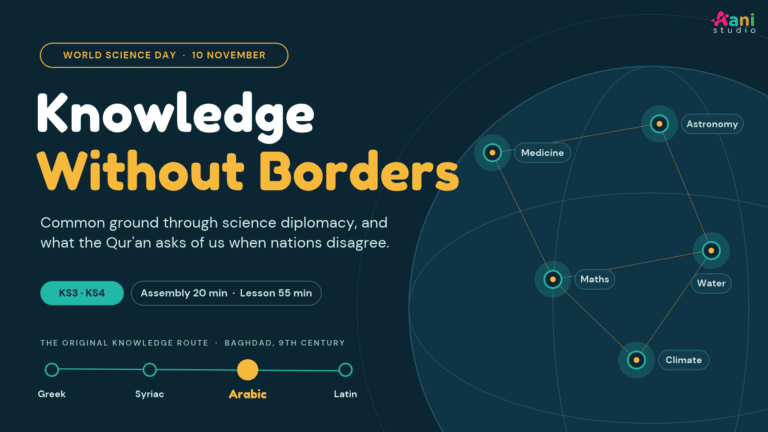
Knowledge Without Borders
World Science Day 2026 KS3–KS4 Lesson & Assembly Slides · Worksheets · Answers · Teacher guidelines · Poster
 Cross-Curricular & Events
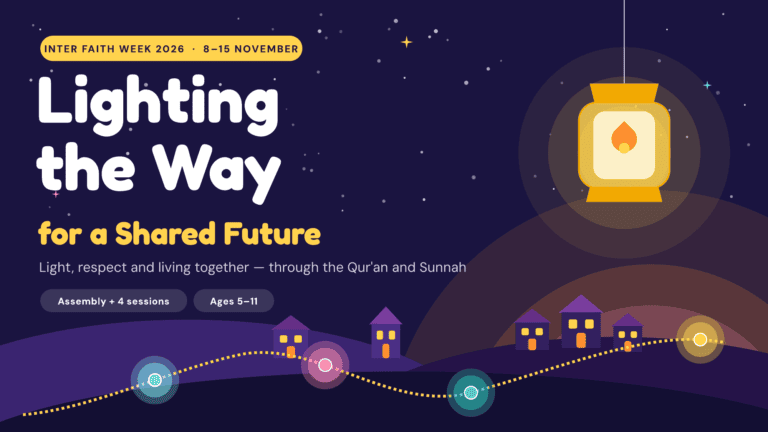
Lighting the Way for a Shared Future
Inter Faith Week 2026 Assembly & Lessons Slides · Worksheets · Answers · Teacher guidelines · Poster
 Cross-Curricular & Events
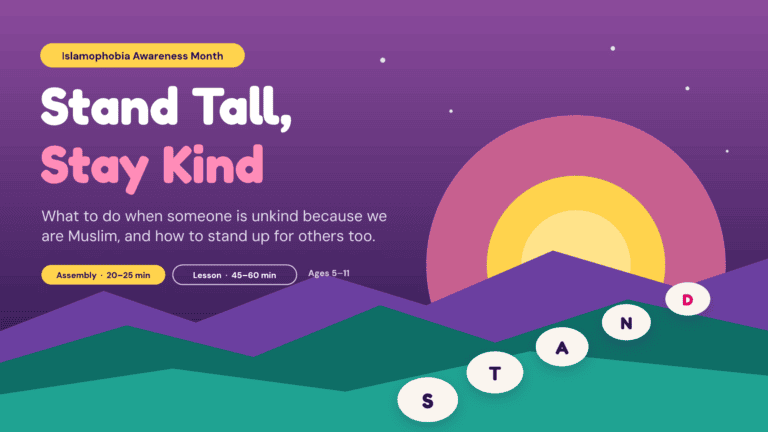
Stand Tall, Stay Kind
Islamophobia Awareness Month Assembly & Lesson Slides · Worksheets · Answers · Teacher guidelines · Poster
Wish this pack had something extra?
Tell us in Staff Voice. Teachers' ideas shape what we make next.