World Calligraphy Day: Arabic Calligraphy, Script and Identity
Aani Studio x An-Nasihah

About this pack
In partnership with An-Nasihah Publications. This Key Stage 2–3 lesson for World Calligraphy Day explores how Arabic calligraphy turns writing into art that carries meaning, beauty and identity. Pupils look closely at how Arabic script works: it runs right to left, has 28 basic letters, uses dots to change the sound, and reshapes letters at the start, middle and end of a word. They compare three historic styles, angular Kufic, rounded Naskh and flowing Thuluth, and discover how one script connects many communities and languages. The lesson ends with a Studio Challenge where pupils design one identity word, such as Peace, Hope or Mercy, and explain their design choices. No Arabic reading is needed.
By the end of the lesson, pupils will be able to:
• Understand how Arabic calligraphy expresses meaning, beauty and identity
• Describe key features of Arabic script: direction, joining and dots
• Compare Kufic, Naskh and Thuluth and describe the character of each
• Design a calligraphy-inspired identity word and justify one design choice
What’s inside
- 12-slide presentation
- 4 worksheets
- Teacher answer sheet
- Teacher guidelines (2 pages)
- A4 poster
Curriculum links
SMSC
- SpiritualWhy people make meaningful words beautiful.
- MoralAccuracy as respect: a misplaced dot changes the word.
- SocialDescribe before you judge, and a respectful gallery walk.
- CulturalArabic script across Arabic, Persian, Urdu, Pashto, Sindhi and Jawi.
Cross-curricular
- Art and DesignLine, weight, spacing, composition and designing an identity word
- REIslamic art and the place of beautiful writing in Muslim heritage
- HistoryKufic, Naskh and Thuluth and where each was used
- EnglishDescriptive vocabulary and justified choices
SEND & inclusion
- Word bank, tracing and sentence starters
- Paired talk and oral responses
- EAL vocabulary pre-teaching on slide 4
- Trace and colour, free design or digital design options
How this lesson meets your standards
SMSC: Spiritual · Moral · Social · Cultural
British values: Individual liberty · Mutual respect and tolerance
Personal development: Life in modern Britain and citizenship
ISI framework: Section 2: Pupils’ education, training and recreation · Section 3: Pupils’ physical and mental health and emotional wellbeing · Section 4: Pupils’ social and economic wellbeing and contribution to society
Performance Standard 2: 2.1 Personal development · 2.2 Understanding of Islamic values and awareness of Emirati and world cultures · 2.3 Social responsibility and innovation skills
Domain 3: Learning outcomes: 3-2 Personal development · 3-2 Social development
Students’ Personal Development and Well-being: Well-being and inclusion: development opportunities · Well-being and inclusion: independent learning and leadership · Students’ behaviour: responsible citizenship
Cambridge learner attributes: Responsible · Reflective · Engaged · Confident · Innovative
IB learner profile: Principled · Open-minded · Caring · Reflective
CASEL competencies: Self-Awareness · Self-Management · Social Awareness · Relationship Skills · Responsible Decision-Making
Personal and Social Well-being: Development of the self · Social responsibility
General capabilities: Ethical Understanding · Intercultural Understanding · Personal and Social capability · Civics and Citizenship
Teacher reviews
Be the first teacher to review this pack.
Members can review a pack after teaching it. Log in
Reviewed by local scholars
Hanafi fiqh throughout
Sources checked
Qur'an and hadith verified before use
Made by teachers
Taught at Aani Academy
More like this
See all Cross-Curricular & Events
The Kindness Effect
World Kindness Day 2026 Assembly & Lesson Slides · Worksheets · Answers · Teacher guidelines · Poster
 Cross-Curricular & Events
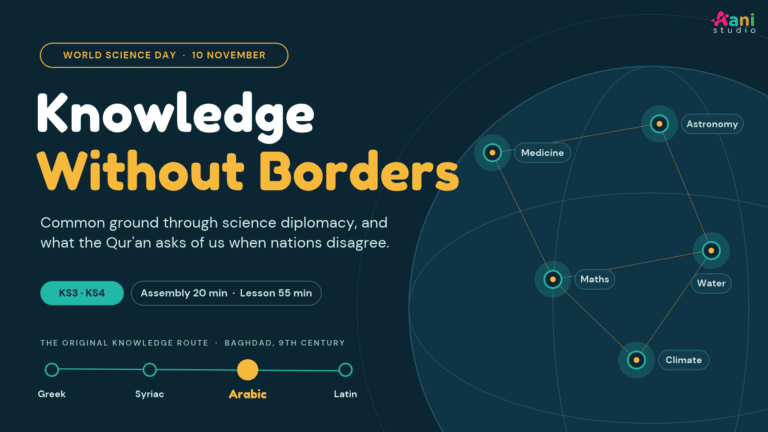
Knowledge Without Borders
World Science Day 2026 KS3–KS4 Lesson & Assembly Slides · Worksheets · Answers · Teacher guidelines · Poster
 Cross-Curricular & Events
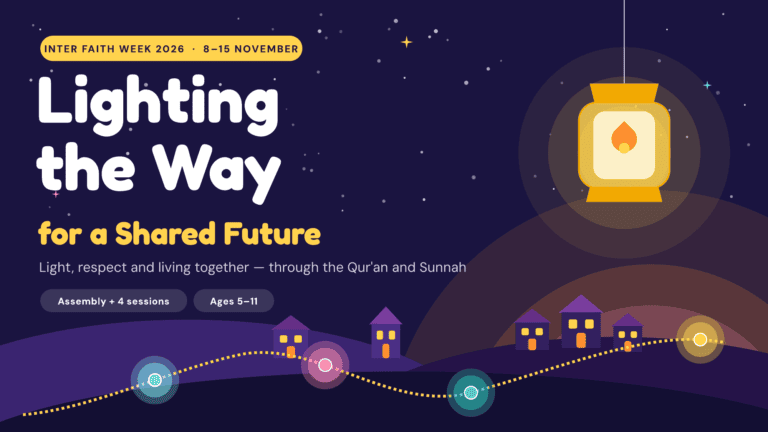
Lighting the Way for a Shared Future
Inter Faith Week 2026 Assembly & Lessons Slides · Worksheets · Answers · Teacher guidelines · Poster
 Cross-Curricular & Events
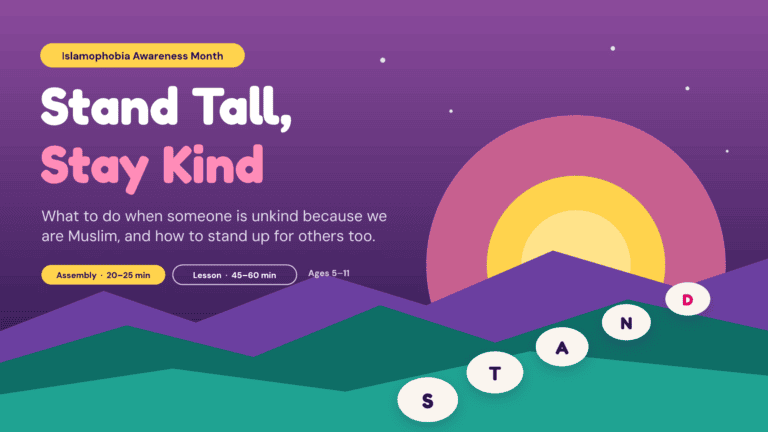
Stand Tall, Stay Kind
Islamophobia Awareness Month Assembly & Lesson Slides · Worksheets · Answers · Teacher guidelines · Poster
Wish this pack had something extra?
Tell us in Staff Voice. Teachers' ideas shape what we make next.